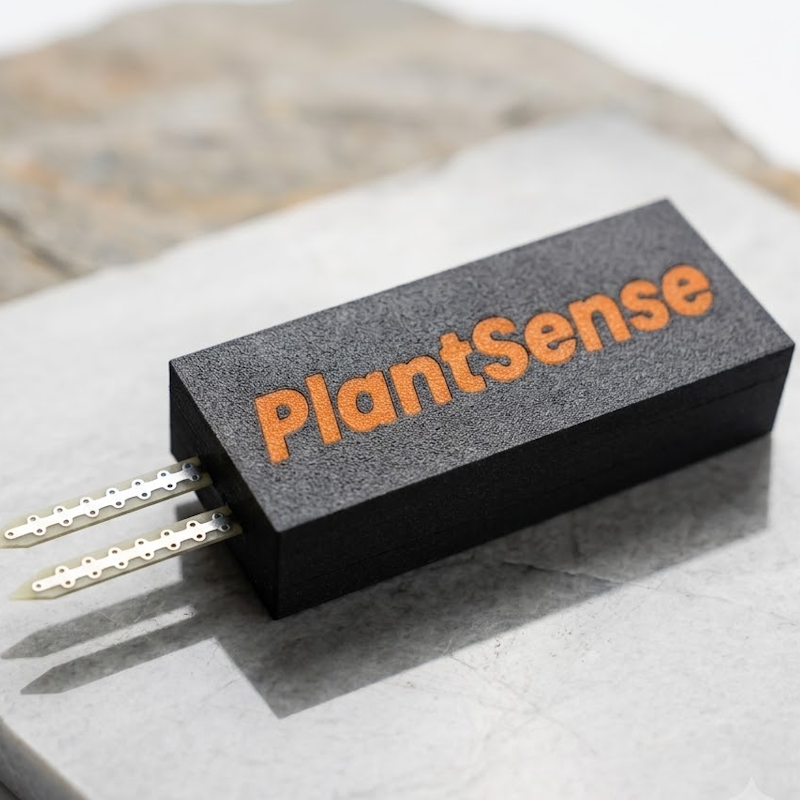
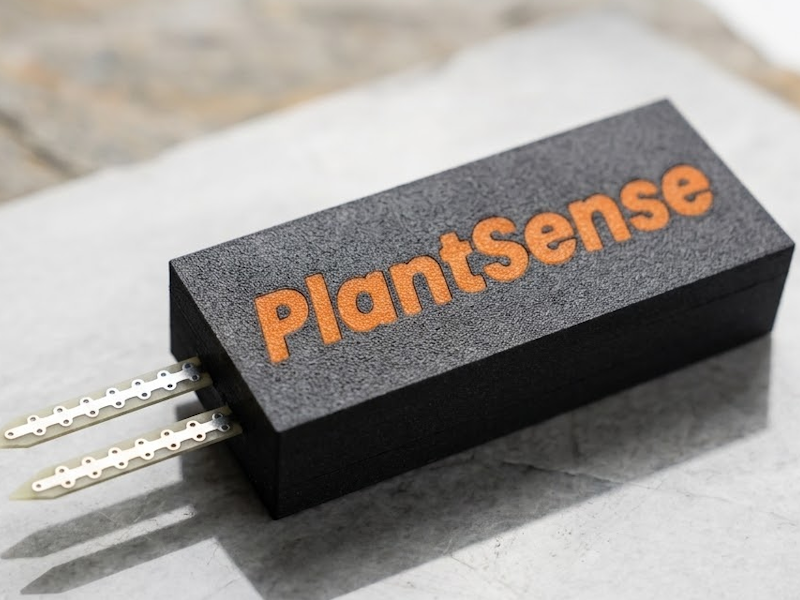
Soil moisture monitor
Know when to water. Not when to guess!
A soil moisture monitor that knows YOUR plant. Every plant has its own watering level, so it tells you plant by plant whether yours actually needs a drink.
Tomato bed
62%
Getting dry
An example. The percentage is the soil, and the words underneath are what it means for that particular plant, since 62 per cent is comfortable for a tomato and far too wet for a rosemary.
How it works
About five minutes, and nothing to configure afterwards. Every monitor is assembled and calibrated by hand in North Somerset before it is packed, so the reading means something from the first minute.
Works with


-
Step one
Plug it in
Open the free app, on Android or iPhone, and it finds the new monitor on its own. Hand over your wifi details and it is on the network. About a minute, and no account needed.
-
Step two
Pick the plant
Choose what is growing there and the monitor takes on everything we know about it. Not just a watering level, but how it changes as the plant grows, when it rests over winter, and what actually goes wrong if it dries out at the wrong moment.
-
Step three
It tells you
You get told when that plant needs water. Not when a timer says so, and not just because a stick says the soil is dry, when that particular plant may be perfectly happy dry. The rest of the time it says nothing, which is rather the point.
In the plant database
There is nothing else like it. Every entry carries a watering level, what to grow it in, how deep the plant roots, whether it minds tap water, when it rests over winter, and what actually goes wrong if it dries out at the wrong moment. Many change as the plant grows, so a seedling and the same plant fruiting are not treated alike.
It grows every month, and it corrects itself. Where enough gardens are growing the same plant, what those gardens actually do feeds back and the figures improve for everybody. No packet, no forum thread, no guesswork handed down.
From the shop
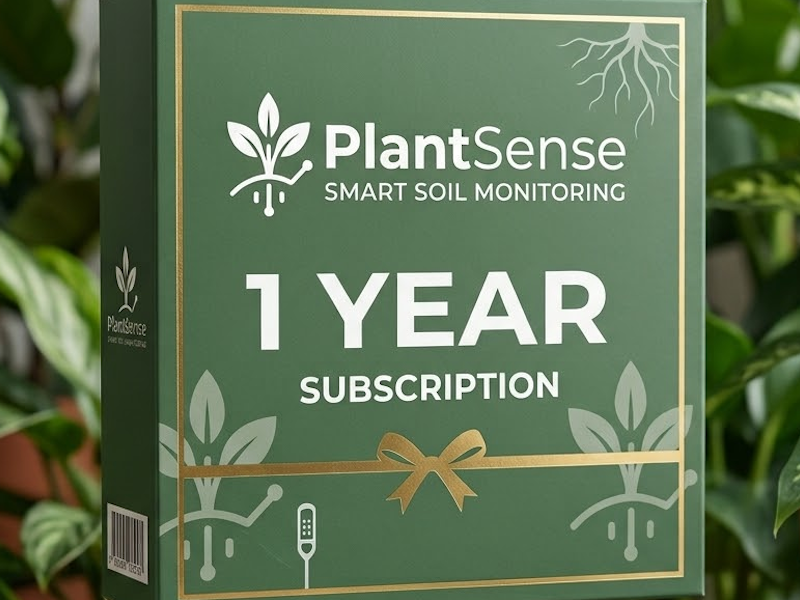
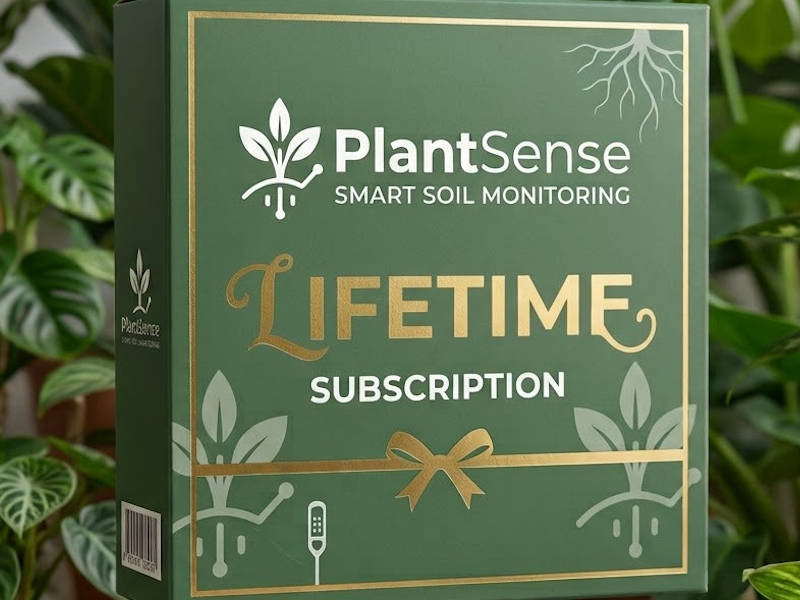
From our frequently asked questions
How does it know what my plant needs?
You tell it what you are growing and we then look it up in the most comprehensive plant database of its kind online. Every plant in it is researched on its own: the level it wants water at, what to grow it in, how deep it roots, whether it minds tap water and when it rests over winter. It also asks about your pot, your compost and roughly where you are, so what it tells you fits your plant rather than a plant.
What makes it different from a ten pound meter?
Two things. A cheap meter reads on a scale somebody invented, which is why two of them in the same pot disagree. Ours is calibrated by hand before it ships, so the number is a real measurement. And a cheap meter has no idea what it is sitting in. Ours does, which is the difference between being told the soil is dry and being told whether that matters.
Do I need a subscription?
No, and there never will be. Seeing your plants from anywhere, years of history, alerts and Alexa are all included free, for the life of the unit. The only things that ever cost anything are identifying a plant or checking its health from a photo, and every account starts with ten of those free. Other sensors with far less going on charge a subscription for what we give away.
Will it work with Home Assistant or Alexa?
Both. Home Assistant three different ways, including reading the monitor directly on your own network with no broker and nothing to install. Alexa answers questions about your plants out loud, once your monitors are on your free account so it can reach them from outside the house.
How accurate is it, really?
It samples the soil every three seconds, over ten thousand readings an hour, on a probe calibrated by hand. But accuracy on its own is not really the point. Knowing the soil is at forty per cent is worth nothing until you know that forty per cent is comfortable for a rosemary and a slow death for a fern. That is the part everybody else leaves out.
What happens when my plant grows?
It keeps up. Many entries carry growth stages, so a tomato seedling and the same plant in full fruit are not treated alike, and plants that rest over winter are left alone rather than nagged about. Tell it when the plant went in and it moves through the stages on its own.
Any sensor can tell you it is dry
Most soil sensors are a cheap probe and a number. Push it in, it says wet, or it says dry, and that is your lot. Anyone who has actually grown anything knows it is not that simple.
Ours reads the soil every three seconds, over ten thousand times an hour, on a probe we calibrate by hand before it goes in the box. That gives you a real measurement of what is happening down where the roots are, rather than a number somebody made up when they designed the probe.
The clever part is what happens next. We then look each plant up in the most comprehensive database of its kind online, researched plant by plant to learn what each one actually wants: how much water and when, what to grow it in, how deep it roots, whether it minds your tap water, when it takes the winter off, and what goes wrong if it dries out at the wrong moment. So it will not nag you about a rosemary that is perfectly happy sitting dry, and it knows a tomato in flower is thirstier than the same plant was in May.
It gets better, too. The database grows every month, and where enough gardens are growing the same plant, what those gardens really do feeds back and the figures improve for everybody.
Built in Somerset, tested in real gardens and plant pots
PlantSense started because a tomato bed kept getting watered on a schedule instead of on need. Shop bought meters gave a simple wet or dry, with no context at all and no thought for the plant in the ground, so we built one that knows the plant, knows the growing medium, and knows what to do about it and when.
Designed, researched and assembled in North Somerset, England, by a team that has been growing things for rather a long time. We do not just know databases. We know plants.