
Journal
Why cheap soil meters lie to you
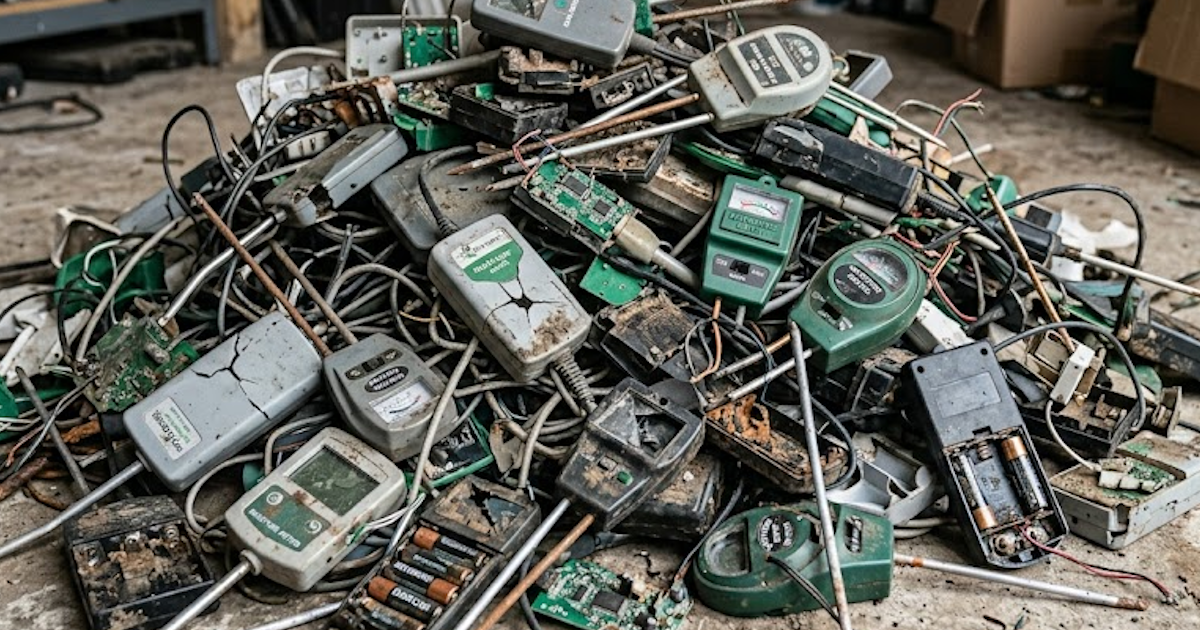
Push a cheap moisture meter into a pot and it swings confidently to a number. Push it into the pot next to it and you get a different number, even though you watered them both the same twenty minutes ago. Something is wrong, and it is not the water.
What is really being measured
Most affordable probes do not measure water at all. They measure how easily electricity crosses the gap between two metal tips. Water carries current, so more water usually means an easier crossing, and the meter turns that into a number.
The problem is everything else that changes how well soil conducts. Dissolved fertiliser salts raise conductivity sharply, so a freshly fed bed reads wetter than it is. Compacted clay conducts differently to open sandy loam. Temperature shifts the reading over the course of a day. Compost with a lot of bark in it behaves differently again.
Why the scale is the real problem
A meter printed with a dry to wet dial has to assume a soil. The manufacturer picks something average, prints the scale, and ships it worldwide. If your soil is not that soil, every reading is offset, and you have no way of knowing by how much.
You see this clearly when you compare published advice. One respected source says tomatoes should sit above forty percent. Another insists they should be under fifteen. Both are describing real experience, on different meters, with scales that do not agree.
What calibration actually does
Calibration anchors the two ends of the scale to your own ground. You tell the monitor what dry looks like in that bed, and what properly watered looks like in that same bed, and it maps everything between those points.
After that the percentage means something local and specific. Sixty percent in your raised bed is genuinely sixty percent of the way between parched and satisfied, in that soil, with that probe. It becomes a figure you can set a threshold against.
This is the whole idea behind PlantSense, and the how it works page walks through the two button calibration that anchors the scale to your soil. It is the step cheap meters skip, and the reason their numbers cannot be trusted.
The practical upshot
Calibrate in the bed, not on the kitchen table. Do the wet reading after the water has drained rather than while it is still pooling. Recalibrate if you dig a bed over or change the compost substantially. And treat any watering percentage you read online as a starting point to test rather than a target to hit.
If you would rather start from a figure that has already been worked out, every plant in our plant database carries a tested threshold to calibrate against and adjust. And if you have had enough of a meter that reads nonsense, the shop has monitors that calibrate to your own ground and hold that calibration through a power cut.
Leave a comment